
When considering security lights to deter burglars, both solar and wired options have merits. Solar lights can be strategically placed anywhere and reduce energy costs, providing flexibility and eco-friendliness. However, wired lights offer consistent illumination, unaffected by weather conditions. While solar lights are easier to install and maintain, wired systems might require professional help and ongoing electricity expenses. Understanding these differences can help you make a more informed choice about your security lighting needs. More insights await you.
Key Takeaways
- Wired security lights provide consistent illumination, crucial for deterring burglars at all times regardless of weather conditions.
- Solar security lights can be strategically placed in remote areas, enhancing visibility and making properties less appealing to intruders.
- The reliability of wired lights ensures constant operation, which may discourage potential burglaries compared to solar lights that rely on battery performance.
- Solar lights, while eco-friendly, may have fluctuating brightness levels, potentially reducing their effectiveness in deterring criminals during cloudy conditions.
- Both options can enhance security; however, the choice may depend on installation feasibility and energy costs associated with wired systems.
Understanding the Basics
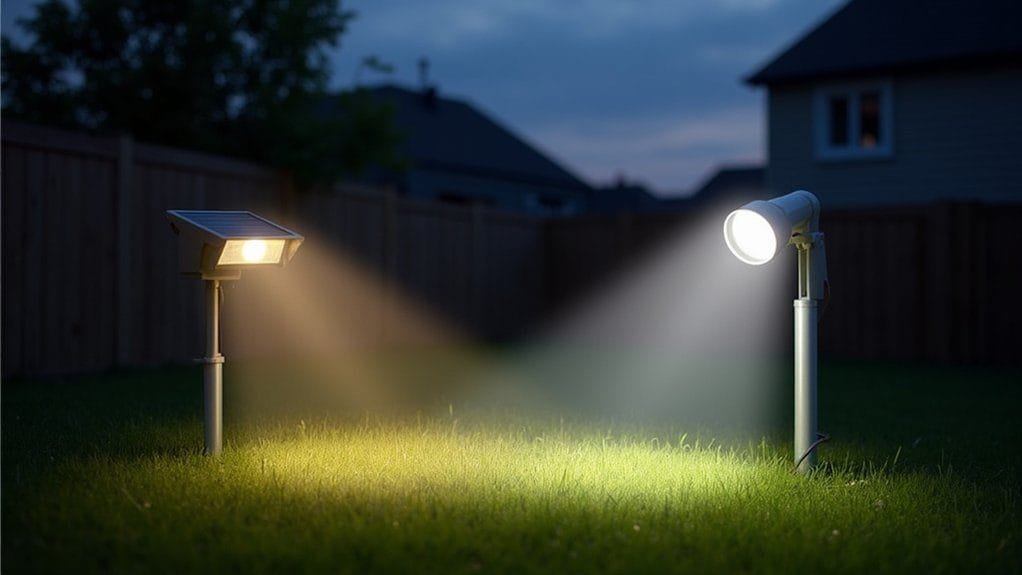
When considering security lighting options, understanding the fundamentals of solar and wired systems is essential. Solar security lights harness sunlight through photovoltaic cells, making them energy-efficient and independent of the electrical grid. This flexibility allows for strategic placement in outdoor lighting setups, enhancing your home security. Conversely, wired lights connect directly to your electrical system, ensuring consistent illumination, particularly in critical areas. While solar lights may have higher initial costs due to solar panels and batteries, wired systems often incur ongoing electricity expenses. Maintenance differs as well: solar lights require minimal upkeep, mainly battery replacements, whereas wired systems might need more extensive care. Both options effectively deter burglars, but their suitability depends on your specific needs and installation preferences.
Comparing Solar and Wired Security Lights
As you weigh your options for security lighting, comparing solar and wired systems reveals distinct advantages and limitations for each.
| Feature | Solar Security Lights | Wired Security Lights |
|---|---|---|
| Energy Costs | Lower long-term costs, eco-friendly | Ongoing electricity expenses |
| Initial Costs | Higher due to solar panels | Generally lower, may require pro installation |
| Maintenance | Minimal, mostly battery replacements | More extensive upkeep required |
| Performance | Affected by weather and sunlight | Consistent illumination |
| Sustainability | Increasingly favored | Valued for reliability |
Ultimately, your choice will depend on your priorities regarding performance, maintenance, and sustainability in your security lighting solution.
Cost Analysis (Initial and Long-term)
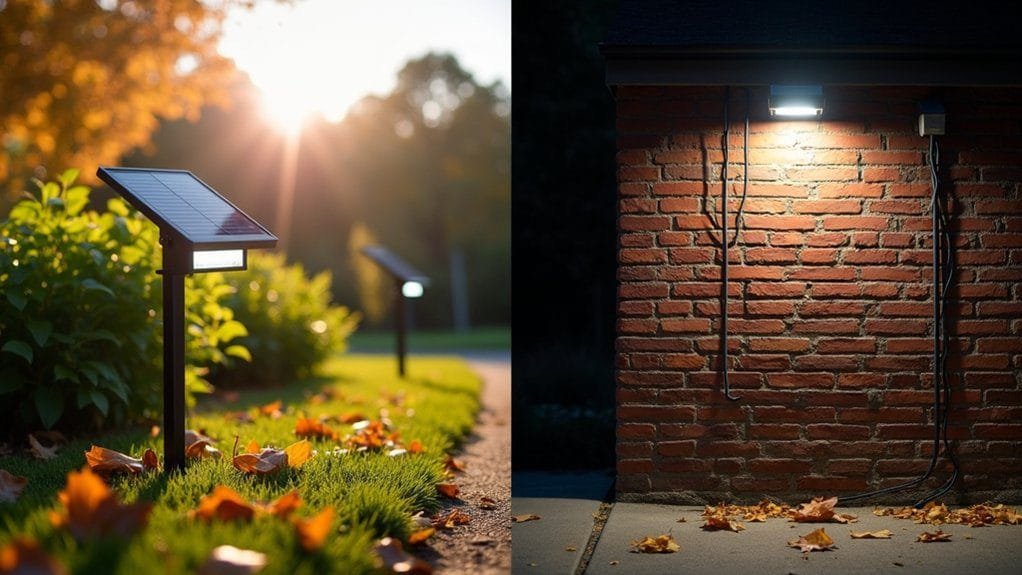
While weighing the costs of solar versus wired security lights, it’s essential to contemplate both initial investments and long-term savings. Solar-powered options typically have higher upfront costs, ranging from $50 to $200, due to solar panels and batteries. In contrast, wired lights start at around $30 but often incur installation costs between $100 and $300. However, the cost analysis shifts over time; solar lights eliminate electricity bills, potentially saving you $100 to $200 annually. With a lifespan of over 10 years and lower maintenance costs—mainly battery replacements—solar lights can lead to substantial long-term savings. In a 20-year period, homeowners may save thousands compared to the ongoing expenses associated with wired security lights.
Installation and Maintenance
Choosing between solar and wired security lights involves understanding the differences in installation and maintenance. Solar lights are easy to install, requiring no electrical wiring, allowing you to place them in sunny spots without professional help. This makes them ideal for DIY projects and remote areas lacking electrical access. In contrast, wired lights involve a complex installation process that usually necessitates a certified electrician, increasing your upfront costs considerably. When it comes to maintenance, solar lights require minimal upkeep, mainly occasional battery replacements. Wired lights, however, may demand more frequent attention due to potential wiring issues or bulb replacements. Understanding these factors helps you choose the best option for your security needs.
Evaluating Performance
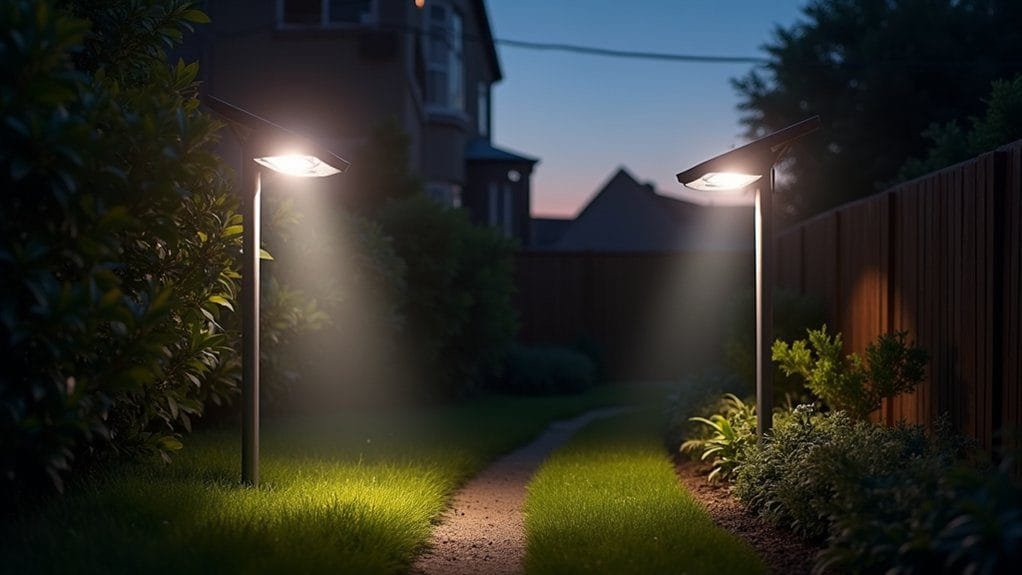
When evaluating performance, several key factors distinguish solar and wired security lights. Solar security lights rely on solar panels, making their efficiency dependent on sunlight availability, which can vary by location and season. In contrast, wired security lights deliver consistent illumination unaffected by weather conditions, proving more reliable in critical security areas. While solar lights often feature advanced motion sensors to enhance functionality, wired options may require professional installation for similar technologies. Significantly, solar lights tend to have longer lifespans due to fewer moving parts, while wired systems may necessitate more frequent maintenance. However, ongoing advancements in solar technology are improving battery efficiency and smart connectivity, making solar security lights increasingly competitive with traditional wired systems.
Environmental Impact
As homeowners increasingly seek sustainable solutions for their security needs, the environmental impact of solar versus wired security lights becomes an essential consideration. Solar security lights greatly reduce your carbon footprint by harnessing renewable energy from sunlight, whereas wired options often contribute to greenhouse gas emissions due to their reliance on fossil fuel-generated electricity. Additionally, solar lights generally have a lower environmental impact over their lifecycle, requiring fewer materials for manufacturing and featuring simpler designs that lead to fewer component failures. By opting for solar-powered security lights, you actively decrease the demand for non-renewable energy sources, supporting a cleaner energy future. With ongoing advancements in solar technology, these eco-friendly solutions are poised to become even more efficient and effective.
Homeowner Perspectives
The choice between solar and wired security lights often reflects homeowners’ individual preferences and priorities. Here are some key considerations:
- Installation: Solar security lights are easy to install, requiring no professional help, while wired systems often need expert installation.
- Flexibility: With solar lights, you can easily adjust placements to improve safety based on changing security needs.
- Reliability: Wired systems provide consistent brightness in critical areas, ensuring your home stays safe during nighttime.
- Maintenance: Solar lights demand minimal upkeep, primarily battery replacement, which enhances peace of mind for long-term use.
Ultimately, many homeowners appreciate a blend of both options, recognizing that each type contributes uniquely to making their home safe.
The Future Outlook
While advancements in technology reshape the landscape of home security, solar-powered lighting solutions are poised to become increasingly prominent. As solar panel efficiency and battery technology improve, the reliability of solar security lighting will rise, catering to your residential security needs. Growing consumer awareness of environmental issues is driving demand for these eco-friendly options, which help reduce carbon footprints. Moreover, as home automation technology evolves, you’ll find solar security lights integrating seamlessly for remote monitoring and control. The trend of combining solar lights with motion detection enhances safety while promoting energy conservation. With their flexibility in placement and low long-term costs, solar-powered lighting solutions are likely to dominate your future security landscape, effectively deterring burglars.
Frequently Asked Questions
Do Solar Lights Deter Burglars?
Solar lights can effectively deter burglars by enhancing nighttime visibility through motion sensor benefits, easy installation, and energy savings. Their environmental impact and strategic placement contribute to a thorough home security approach, making them a valuable asset.
Do Security Lights Deter Burglars?
You’d think all security light types deter burglars equally, but an effectiveness comparison reveals nuances. Consider installation challenges, energy efficiency, and cost analysis. User testimonials emphasize strategic lighting as vital for enhancing your property’s safety.
Are You Less Likely to Get Robbed if You Leave Lights On?
Leaving home lighting on doesn’t greatly reduce burglary risks. Burglars exploit outdoor visibility, making effective crime prevention measures like light timers, strong locks, and monitoring systems essential for enhancing neighborhood safety and lowering burglary statistics.
Do Automatic Lights Deter Burglars?
Automatic lights enhance burglary prevention tactics through motion detection effectiveness, strategic lighting placement, and improved neighborhood safety measures. By illuminating your property, you create an environment that deters intruders and promotes outdoor security tips for homeowners.
Which Type of Security Light is More Effective at Deterring Burglars: Solar or Wired?
When considering outdoor security options, the litom and aootek solar light comparison reveals key differences. Litom lights offer advanced motion detection and a broader beam, while Aootek boasts a longer battery life. Analyzing these features helps homeowners choose the most effective lighting solution to deter potential burglars.
Conclusion
In the garden of home security, both solar and wired lights bloom, each with its unique strengths. Solar lights, like resilient sunflowers, thrive on independence and sustainability, while wired options resemble sturdy oaks, offering reliability through established roots. Ultimately, your choice depends on your landscape—consider the light that best nurtures your peace of mind. As you weigh the benefits, remember: the most effective deterrent is the illumination that shines brightest in your life.