
When choosing between silicone and metal straws, you’ll want to evaluate multiple factors. Metal straws offer superior durability and recyclability, while silicone provides more flexibility and safety. Both alternatives eliminate single-use plastic waste effectively. Metal straws excel in long-term environmental impact, but silicone might suit children better. Your ideal choice depends on specific drinking needs, temperature preferences, and personal sustainability goals. The nuanced comparison reveals deeper insights await.
Key Takeaways
- Metal straws offer superior durability, recyclability, and a lower environmental impact compared to silicone straws, making them more eco-friendly.
- Silicone straws provide better flexibility, safety for children, and easier cleaning, particularly in dishwasher settings.
- Both straw types are non-toxic and FDA-approved, eliminating health concerns associated with single-use plastic alternatives.
- Cost considerations are comparable, with both straw types ranging from $5-$25 per set and generating annual savings of $20-$30.
- The ideal choice depends on individual preferences, including portability needs, beverage types, temperature requirements, and personal comfort.
Understanding Silicone and Metal Straws
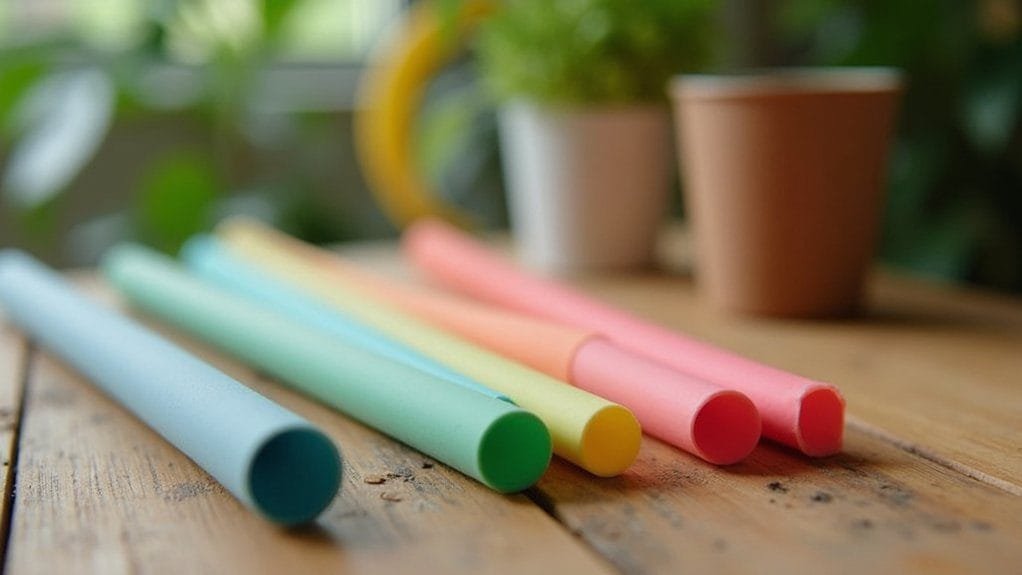
Although eco-friendly alternatives to plastic straws have gained significant popularity, consumers often find themselves weighing the merits of silicone versus metal options. These reusable straws offer distinct characteristics that impact their usability and performance. Silicone straws provide exceptional flexibility and safety, crafted from food-grade materials that accommodate both hot and cold beverages. Metal straws, typically constructed from stainless steel, deliver superior durability and corrosion resistance. Each material presents unique pros and cons for environmentally conscious users. Silicone’s adaptability allows for custom length modifications, while metal straws maintain rigid structural integrity. Both options represent eco-friendly alternatives with specific cleaning requirements—silicone straws are typically dishwasher safe, and metal straws necessitate specialized cleaning brushes. Understanding these fundamental differences enables consumers to make informed decisions about their sustainable drinking accessory choices.
Safety and Health Considerations
While consumer safety remains paramount in selecting drinking accessories, material composition plays a critical role in determining the health implications of reusable straws. Silicone and metal straws offer non-toxic, food-grade alternatives that are safe to use, with FDA-approved materials ensuring no chemical leaching. Metal straws demonstrate exceptional durability and resistance to oxidation, while silicone straws provide superior flexibility and softness, particularly beneficial for children’s use. Both straw types require diligent cleaning practices to maintain ideal hygiene and prevent bacterial accumulation. When evaluating safety, consider the specific attributes of each material: metal straws’ structural integrity and silicone straws’ adaptable nature. Your choice should prioritize not just environmental sustainability, but also thorough health considerations, ensuring a safe and responsible drinking experience across different beverage consumption scenarios.
Environmental Impact
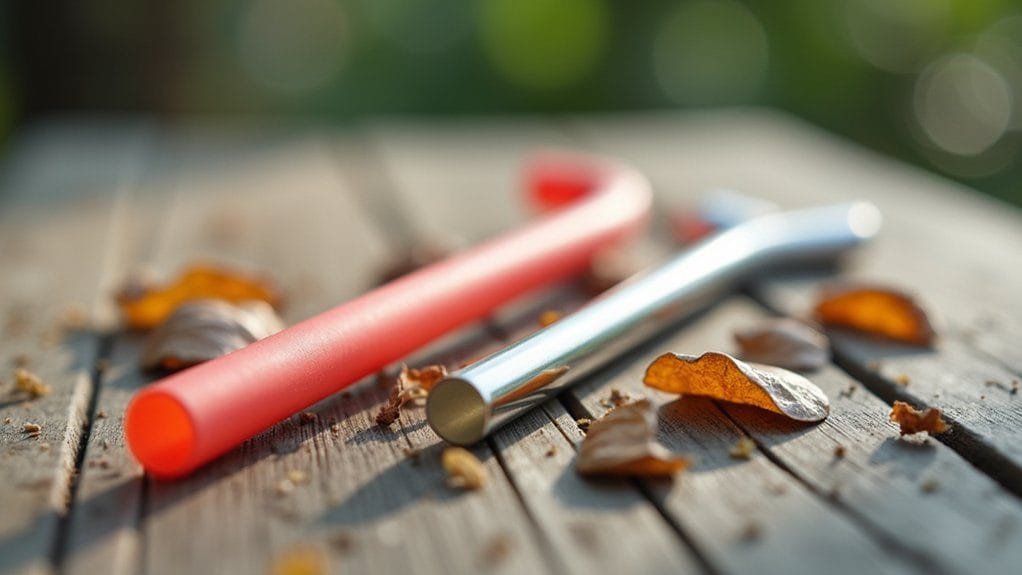
Since environmental sustainability has become a critical global concern, the ecological footprint of drinking accessories demands rigorous examination, particularly when comparing silicone and metal straws. While silicone straws present recyclability challenges, metal straws offer superior environmental credentials. Their manufacturing process generates a lower carbon footprint, and metal’s inherent recyclability surpasses silicone’s specialized recycling requirements.
Metal straws demonstrate exceptional longevity and durability, potentially reducing waste more effectively than silicone variants susceptible to wear and tear. Both alternatives considerably mitigate plastic pollution by replacing single-use plastic straws, which contribute to approximately 3 billion daily disposals. When evaluating environmental concerns, metal straws emerge as the more sustainable option, providing a robust, long-term solution to reducing ecological impact through responsible material sourcing and recyclable infrastructure.
Durability and Longevity
Building upon the environmental considerations, the durability and longevity of straws become paramount in evaluating their practical value and sustainability.
Durability and material performance reveal key distinctions between silicone and metal straws:
- Resistance: Silicone straws demonstrate exceptional durability, being virtually indestructible and resistant to breakage, while metal straws can dent or scratch but maintain structural integrity.
- Temperature Tolerance: Both materials withstand high temperatures, though metal straws conduct heat rapidly, necessitating careful handling. Silicone straws remain cool to the touch.
- Maintenance: Proper cleaning and maintenance determine longevity. Silicone straws offer easier dishwasher cleaning, whereas metal straws require specialized brushes for thorough sanitation.
Recyclability further distinguishes these materials, with metal straws more readily integrated into curbside recycling programs, extending their environmental sustainability and lifecycle potential.
Thermal Conductivity
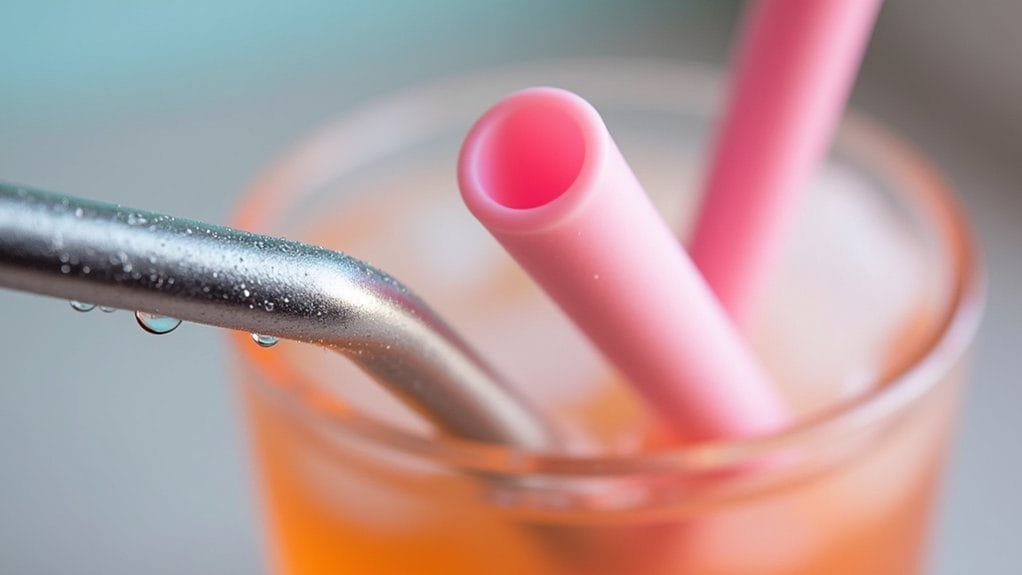
Thermal conductivity distinguishes silicone and metal straws as fundamentally different drinking accessories. Silicone straws offer low thermal conductivity, ensuring you can enjoy hot drinks and cold beverages without discomfort. Their unique thermal properties allow them to remain safe and versatile across temperature ranges, preventing unpleasant temperature sensations against your lips.
Metal straws, conversely, effectively conduct heat and cold, which can make them challenging to use with temperature-extreme liquids. When you drink hot beverages through a metal straw, the thermal transfer can quickly heat the straw’s surface, potentially causing burns or uncomfortable drinking experiences. Silicone’s superior thermal characteristics mean you’ll have a more consistent and comfortable drinking experience, regardless of your beverage’s temperature. This makes silicone straws a safer, more adaptable option for users seeking reliable drinking accessories.
Cleaning and Maintenance
While cleaning and maintenance are vital for any reusable drinking accessory, straws made of silicone and metal present distinct considerations for users seeking peak hygiene. Your approach to cleaning these straws should involve multiple strategies:
Elevate your reusable straw hygiene with strategic cleaning techniques tailored to silicone and metal materials.
- Use dishwasher-safe options for convenient, thorough cleaning, leveraging both silicone and metal straws’ compatibility with high-temperature washing.
- Employ a dedicated cleaning brush for metal straws to access narrow interior spaces and remove trapped debris effectively.
- Implement regular soaking in hot, soapy water to eliminate stubborn stains and prevent odor accumulation.
Silicone straws’ flexible design enables easier manual cleaning, while metal straws require more precise maintenance. Both materials demand consistent care to guarantee excellent hygiene and longevity. Your cleaning technique will directly impact the straw’s performance and sanitation, making attentive maintenance essential for sustainable drinkware.
Cost Analysis
Numerous consumers find themselves weighing the financial implications of purchasing silicone versus metal straws, with cost serving as a critical decision-making factor. When analyzing reusable straws, you’ll discover that both silicone and metal options range from $5 to $25 per set, with an average investment of $12-$14. While the initial purchase might seem comparable, long-term cost-effectiveness varies. Silicone straws often provide a longer lifespan and typically include cleaning tools, potentially reducing additional expenses. Metal straws might require separate cleaning brushes, incrementally increasing overall costs. By choosing either option, you’ll effectively replace single-use plastic straws, generating approximate annual savings of $20-$30. The durability of these alternatives guarantees a sustainable investment, making reusable straws a financially prudent choice for environmentally conscious consumers seeking both economic and ecological benefits.
Practical Usage and Versatility
Because practicality determines a straw’s real-world effectiveness, consumers must evaluate the unique usage characteristics of silicone and metal alternatives. When comparing silicone and metal straws for practical usage and versatility, consider these key factors:
- Flexibility: Silicone straws adapt to different cup sizes and beverage types, offering unparalleled versatility compared to rigid metal alternatives.
- Temperature Tolerance: Metal straws conduct heat, requiring caution with hot drinks, while silicone straws remain safe for both hot and cold beverages.
- Drink Compatibility: Silicone straws excel with thick beverages like smoothies due to their wider diameter and flexible design, making them more practical for diverse drink types.
Both straw types are dishwasher safe, but silicone requires more careful maintenance to prevent residue buildup. Your choice depends on prioritizing portability, durability, and specific beverage needs.
Frequently Asked Questions
Are Silicone or Metal Straws Better?
You’ll find silicone straws excel in user experience and safety, offering better heat resistance and kid-friendly design, while metal straws provide superior durability and sustainability impact, making your choice dependent on specific environmental and personal preferences.
What Is the Disadvantage of Silicone Straw?
Oh, you’ve fallen for the silicone straw trap! Beware its durability concerns, taste interference, and temperature sensitivity. You’ll battle cleaning challenges, color fading, and environmental impact while questioning its longevity and overall user satisfaction.
Which Type of Straw Is Best?
You’ll find silicone straws superior for eco-friendly, versatile use, offering safer design, better taste neutrality, easier cleaning, and kid-friendly features, while balancing durability, portability, and minimal environmental impact compared to alternative straw materials.
Can Mold Grow on Silicone Straws?
Yes, mold can grow on silicone straws if you don’t maintain proper straw hygiene. Regular cleaning, thorough drying, and preventing food particle accumulation are essential for mitigating bacterial presence and ensuring material safety.
Conclusion
Choosing between silicone and metal straws isn’t just about personal preference—it’s a nuanced decision balancing ecological consciousness, health considerations, and practical utility. Like Hamlet’s existential dilemma, you’ll weigh each material’s strengths and limitations. Your ultimate selection will reflect not just a straw choice, but a broader commitment to sustainable living and mindful consumption in an increasingly environmentally aware world.