
When choosing between Philips Hue and LIFX for ambiance, consider your priorities. LIFX offers over 550 billion vibrant colors and direct Wi-Fi connectivity for easy setup. In contrast, Philips Hue provides robust integration and automation features, relying on a smart bridge for expanded functionality. If you prefer flexibility and vivid hues, go with LIFX. For seamless smart home integration, Philips Hue is the better pick. Discover how each system fits your needs to enhance your space.
Key Takeaways
- Philips Hue offers 16 million shades for customizable ambiance, while LIFX boasts over 550 billion color options for vibrant lighting experiences.
- LIFX connects directly to Wi-Fi, simplifying setup and providing easy smartphone and voice control for immediate ambiance adjustments.
- Philips Hue’s smart bridge allows for extensive automation and multi-room control, ideal for users focusing on seamless integration in their smart home.
- LIFX’s brighter output of 1,100 lumens enhances ambiance, making it suitable for users seeking impactful lighting in their spaces.
- Cost-effective LIFX bulbs start at $9.99, while Philips Hue requires additional costs for the smart bridge, impacting overall affordability for ambiance lighting.
What Is a Smart Light?
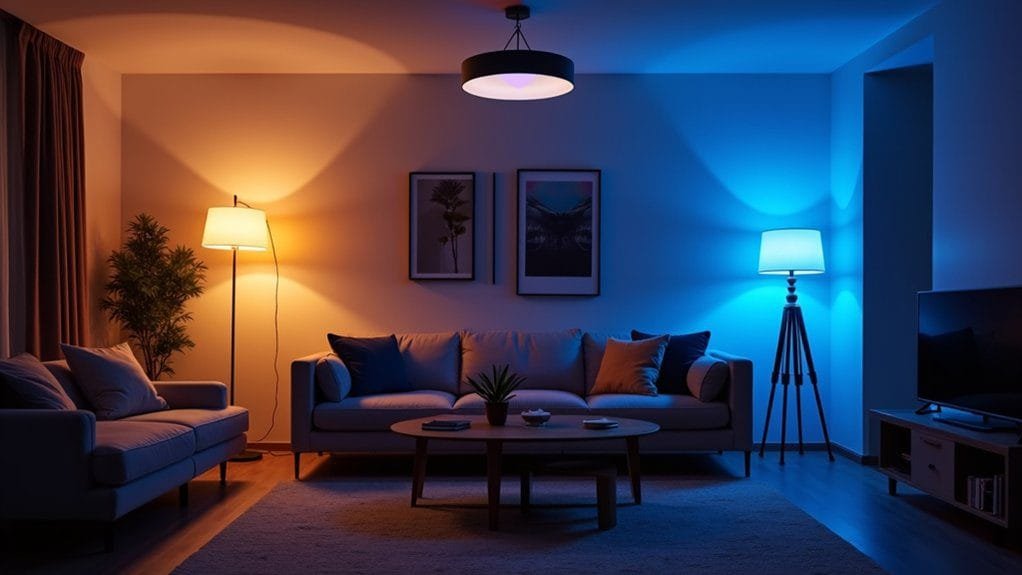
Smart lights are innovative home accessories that revolutionize how you control your lighting. These advanced smart bulbs enable remote management, allowing you to dim, schedule, or change colors to enhance your home’s ambiance. Brands like Philips Hue and LIFX exemplify the evolution of smart lighting, each offering distinct features. LIFX connects directly via Wi-Fi, simplifying setup, while Philips Hue typically requires a smart bridge, adding complexity. With LIFX providing over 550 billion color options compared to Philips Hue’s 16 million, you’ll find extensive customization possibilities. Furthermore, these smart lights contribute to energy savings and improve home automation, lasting longer than traditional bulbs. Embracing smart lighting transforms your living space into a dynamic, energy-efficient environment.
Design Comparison
When comparing the design of LIFX and Philips Hue, you’ll notice both brands prioritize functionality while catering to aesthetic preferences. LIFX takes a bold approach with its flat top design, which may attract attention, whereas Philips Hue leans towards a more traditional bulb appearance, fitting seamlessly into standard light fixtures. Both brands allow easy replacement of traditional bulbs, integrating effortlessly into your existing setup. Regarding lighting capabilities, LIFX boasts over 550 billion colors, while Philips Hue offers over 16 million shades, ensuring diverse lighting options. Available in various sizes and styles, both LIFX and Philips Hue cater to different lighting needs, making them versatile choices for any space, whether you prefer modern or classic designs.
Setup Process
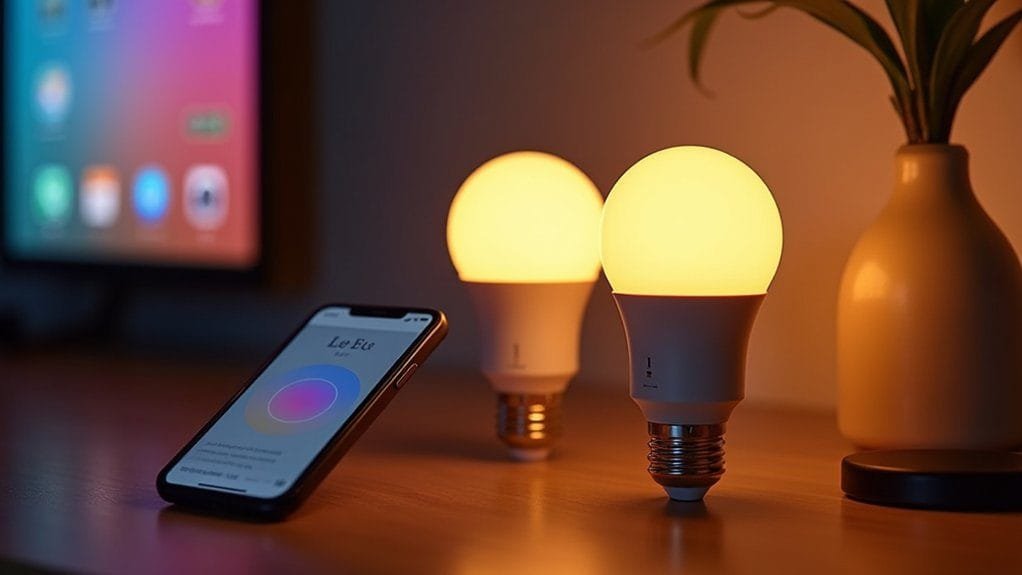
Although both LIFX and Philips Hue offer innovative lighting solutions, their setup processes differ markedly. Here’s a quick overview of their installation methods:
- Philips Hue: You’ll need to install the Philips Hue Bridge, which connects multiple bulbs and creates a mesh network for extensive coverage.
- LIFX: These bulbs connect directly to your Wi-Fi network, streamlining the setup process and eliminating the need for additional hubs.
- App Management: Both brands require downloading their respective apps—Philips Hue app or LIFX app—to manage your smart lights effectively.
While LIFX’s setup is straightforward, Philips Hue’s initial complexity pays off later, simplifying the addition of more bulbs through its mesh network. Choose based on your preference for ease versus long-term flexibility.
Usability and Control
While both LIFX and Philips Hue offer robust usability and control options, they cater to different user preferences and needs. LIFX connects directly to Wi-Fi, enabling straightforward control via your smartphone or voice commands, which simplifies the user experience. In contrast, Philips Hue requires a smart hub or Smart Bridge, enhancing multi-room control and integration with other smart devices. Both apps provide user-friendly interfaces for adjusting light settings, but many users find the Philips Hue app slightly superior in overall experience. When it comes to color control, LIFX shines with over 550 billion shades, vastly surpassing Philips Hue’s 16 million colors. Once set up, both systems offer comparable usability for basic functions like turning lights on/off and adjusting brightness.
Connectivity and Range
The connectivity and range of smart lighting systems profoundly influence user experience, particularly in larger spaces or homes with challenging layouts. Here’s how Philips Hue and LIFX stack up:
- Philips Hue requires a smart bridge, enhancing connectivity through a mesh network, making it reliable even in areas with poor WiFi coverage.
- LIFX bulbs connect directly to WiFi, simplifying setup but needing to stay within the router’s range for best performance.
- Daisy chaining with Philips Hue allows signal strength improvement, while LIFX may struggle with connectivity in distant locations.
Philips Hue supports up to 50 bulbs via its bridge, while LIFX can connect the same number directly. Hue’s Bluetooth feature enables local control for fewer bulbs, but lacks the full network capability.
Color Control and Brightness Options
Color control and brightness options are essential aspects of smart lighting systems that greatly affect ambiance and functionality. LIFX stands out with over 550 billion shades and a color temperature range from 1,500 to 9,000K, allowing you to create warm or cool tones for any occasion. In contrast, Philips Hue offers around 16 million colors, but its color temperature caps at 6,500K, limiting your creative options. Additionally, LIFX boasts a higher light output, delivering 1,015 lumens versus Philips Hue’s 754 lumens, ensuring brighter lighting across all colors. This superior brightness and extensive color control make LIFX a compelling choice for vibrant lighting, enhancing the overall atmosphere of your smart home. Ultimately, your decision will hinge on the importance of these features for your desired ambiance.
Cost and Affordability
When considering smart lighting options, cost and affordability play an essential role in your decision-making process. Here’s a breakdown of key factors to keep in mind:
- Initial Costs: Philips Hue bulbs start at $14.99, but their starter kits begin at $150, requiring the Philips Hue Bridge for advanced features.
- LIFX Pricing: LIFX offers bulbs from $9.99, with no hub needed, making them a more economical choice for extensive installations.
- Budget-Friendly Options: If you’re looking for a cost-effective solution, LIFX’s affordable starter kits and direct Wi-Fi connection make it easier to manage your installation without breaking the bank.
In terms of overall affordability, LIFX generally provides better value compared to Philips Hue, especially for users planning multiple installations.
Energy Efficiency and Longevity
While many homeowners prioritize aesthetics and functionality in smart lighting, energy efficiency and longevity are equally essential elements to take into account. Philips Hue bulbs stand out with their remarkable energy efficiency, consuming 80% less electricity than traditional incandescent lights, thereby reducing your carbon footprint. In contrast, LIFX bulbs, while offering higher brightness, may lead to increased power consumption.
| Feature | Philips Hue |
|---|---|
| Power Consumption | 80% less than incandescent |
| Lifespan | 25,000 hours (approx. 11 years) |
Both brands boast impressive longevity of around 25,000 hours, providing significant savings over time. Ultimately, choosing between Philips Hue and LIFX may hinge on balancing energy efficiency with your lighting needs.
Product Recommendations
How do you choose the right smart lighting solution for your home? It ultimately depends on your needs and preferences. Here are three product recommendations to take into account:
- LIFX Smart Bulbs: Starting at around $24, these bulbs offer a straightforward setup without a hub. With over 550 billion shades and a light output comparable to a 75W bulb, they’re perfect for vibrant color and white lighting.
- Philips Hue Starter Kit: Though it requires an initial hub investment, this lighting solution provides lower individual bulb costs and extensive product variety, ideal for larger installations.
- Philips Hue Light Strips: For a thorough smart lighting ecosystem, these strips integrate seamlessly with the Hue app and support various smart home platforms, enhancing your overall experience.
Final Thoughts on Choosing Between Hue and LIFX
Choosing between Philips Hue and LIFX boils down to your specific lighting needs and preferences, as each system offers distinct advantages. If you’re looking for extensive compatibility with smart home platforms and a robust automation setup, Philips Hue’s smart bridge enhances larger installations. However, if you prefer a straightforward installation and vibrant ambiance, LIFX shines with its brighter output of 1,100 lumens and over 550 billion color options. Additionally, LIFX often proves more cost-effective since it eliminates the need for a hub. Ultimately, weigh your priorities: Philips Hue excels in integration and reliability, while LIFX offers flexibility and creativity. Your choice will depend on which factors matter most in your smart lighting experience.
Frequently Asked Questions
Is LIFX Better Than Philips Hue?
When comparing LIFX and Philips Hue, consider LIFX benefits like superior brightness levels, color accuracy, and installation ease against Philips Hue features such as ecosystem compatibility. Price differences and app usability also affect customer satisfaction.
Is Philips Hue Being Discontinued?
Is Philips Hue being discontinued? Not at all. With consistent product updates and strong market trends, Philips Hue remains a leader in smart lighting, adapting to consumer preferences and integrating advanced LED technology for seamless smart home experiences.
Which Smart Lighting System Is Best?
When choosing a smart lighting system, consider energy efficiency, color accuracy, and bulb lifespan. Evaluate app usability, installation process, light brightness, and price comparison alongside user reviews to make an informed decision for your smart home integration.
What Is the Best Alternative to LIFX?
If smart bulbs were artists, Wyze would be a budget Picasso, mixing vibrant colors and seamless app usability. With solid energy efficiency, design aesthetics, and ecosystem compatibility, it’s a strong alternative to LIFX for your needs.
Do Smart Lights Like Philips Hue and LIFX Save More Energy Compared to Traditional Bulbs?
Smart lights like Philips Hue and LIFX often outperform traditional bulbs in energy efficiency, making them a popular choice for eco-conscious consumers. In the energysaving bulb comparison, these smart options not only allow for customizable settings but also significantly reduce power consumption, leading to lower electricity bills and a smaller carbon footprint.
Conclusion
When choosing between Philips Hue and LIFX, consider what truly enhances your living space. Do you crave vibrant colors and effortless integration, or are you drawn to simplicity and rich hues? Both brands offer unique strengths, but your lifestyle and preferences ultimately dictate the best choice. By evaluating factors like usability, design, and cost, you can create an ambiance that reflects your personality. Embrace the world of smart lighting and elevate your home to new heights.